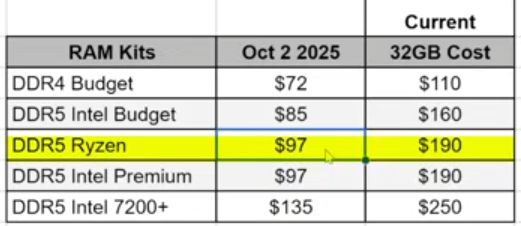
RAM prices are rising mainly due to a mix of higher demand and tighter supply: the AI boom has pushed data centers to buy massive amounts of memory (especially HBM), causing manufacturers to shift production away from regular DDR4/DDR5, while companies also stockpile memory out of supply concerns. At the same time, older RAM like DDR4 is being phased out as factories prioritize newer, higher-profit memory, which creates scarcity instead of price drops. Add in supply-chain costs, longer production lead times, and limited overall manufacturing capacity, and the result is reduced availability and higher prices for consumers.
🧮 Net effect & what this means for you
- If you’re in the market to buy RAM (for a PC build/upgrade), now may be a less favourable time than usual — prices are rising and may continue to do so for a while. Wccftech
- If you’re using older memory standards (DDR4), you may find fewer deals and more scarcity than expected.
- For device manufacturers (PCs, laptops, smartphones), the increased cost of memory components is starting to get passed on to product pricing. Tom’s Hardware
- The “super-cycle” narrative: Some analysts believe we’re entering a multi-year cycle of tight memory supply + high demand (especially driven by AI/data-centres). PC Gamer